![Top 5 Consulting Firms Specializing in Multifunction Printer Manufacturers ERP [Latest 2026]](https://growth-marketing-lab.com/marketing/wp-content/uploads/2025/08/common_08-1-1024x682.jpg)
Multifunction printer manufacturers face rising DX pressure, complex service models, and supply chain demands. The right ERP consulting firm is essential to drive efficiency and growth in 2026.
Why Multifunction Printer Manufacturers Need Specialized ERP Consulting in 2026
The Business Process Reform Imperative: Managing Hardware-Service Management Complexity in MFP Production
MFP manufacturers juggle complex hardware production and growing service contracts simultaneously. ERP systems integrate multiple business processes into one platform, enabling business process reform that eliminates costly data silos across production, logistics, and service teams. ERP implementation guided by specialists ensures operational efficiency gains across the entire organization.
From Siloed Systems to Data Integration: How Cloud ERP Transforms MFP Operations
Many organizations still rely on disconnected systems that block real time data sharing. Cloud-based ERP platforms offer automatic updates and remote access via mobile devices, unifying business data across departments. Modern cloud-based ERP solutions offer flexibility to easily deploy new modules, helping MFP manufacturers stay ahead through seamless system integration and supply chain planning.
Subscription Contract Management and DX Pressures Reshaping ERP Selection for MFP Manufacturers
The shift to subscription-based managed print services demands ERP solutions capable of automated billing and customer relationship management. ERP selection must prioritize platforms supporting integrated maintenance billing and digital transformation goals, as ERP systems must align with strategic business objectives to drive competitive advantage in the digital age.

Overview of the Top 5 ERP Consulting Firms for Multifunction Printer Manufacturers
CONNECTABLUE, Inc.
Company / Service Overview
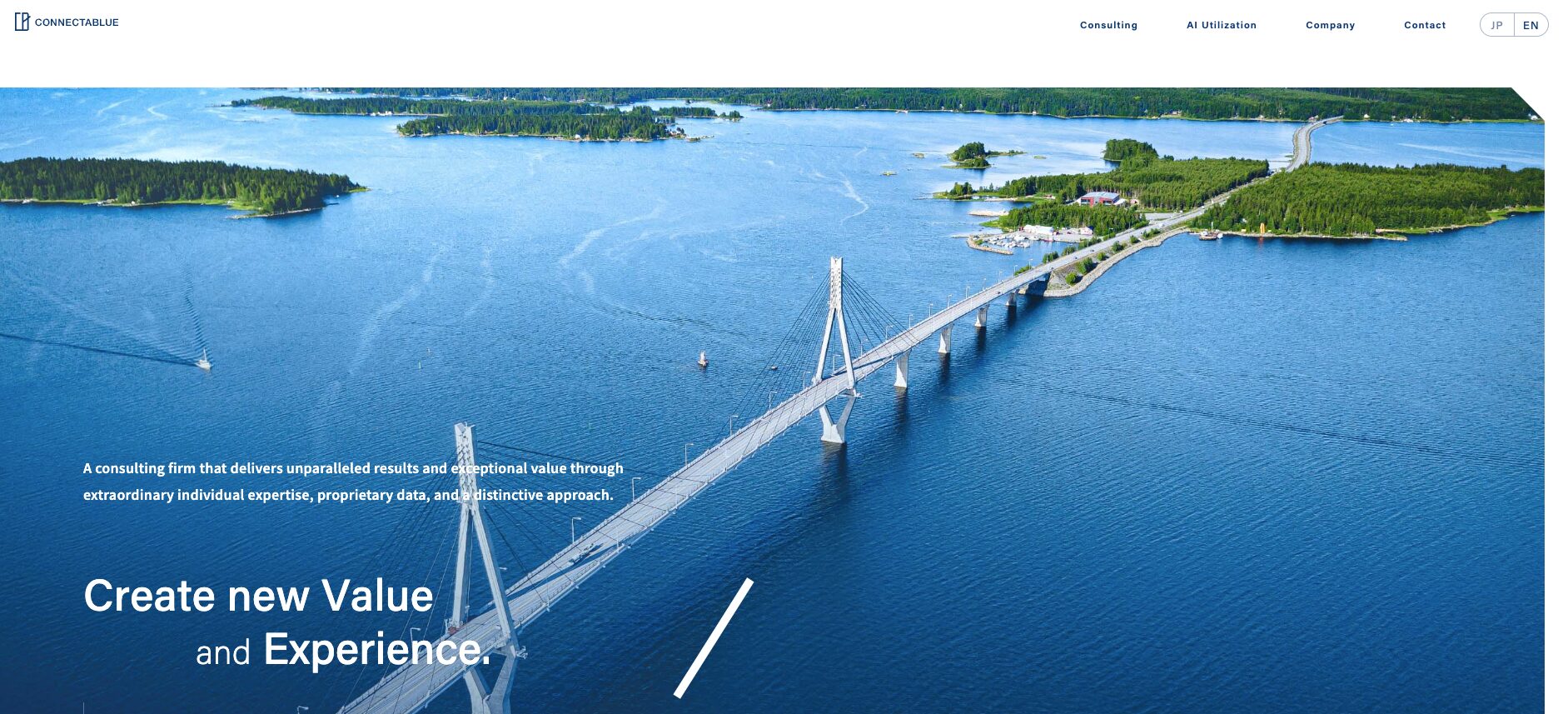
ConnectaBlue Co., Ltd. is a consulting firm that supports Business Process Reform and the strengthening of corporate management foundations, with ERP implementation and utilization support at its core. The company has extensive experience serving both large enterprises and mid-sized companies across a wide range of industries, including manufacturing, trading, construction, IT, and logistics, for major ERP platforms such as SAP, Oracle, and Microsoft. From a vendor-neutral standpoint, it helps clients make optimal decisions for both Cloud and on-premise environments while promoting DX initiatives aligned with both management and operational requirements.
The company is highly experienced in ERP planning based on both business transformation and system modernization perspectives. It excels in formulating ERP strategies centered on Fit to Standard, maximizing the use of standard ERP functionalities while designing future-state operating models that take scalability, maintainability, and cost optimization into account. It also provides strong support for product and vendor selection, including Cloud ERP adoption.
In the implementation phase, ConnectaBlue provides end-to-end support for leading ERP solutions such as SAP, Oracle, and Microsoft, covering requirements definition, system development, migration, go-live, and operational stabilization. Leveraging expertise in management KPI governance, the company also helps clients build advanced BI and data platforms that connect operations and management through Data Utilization, Data Integration, Customer-Level Profitability Management, and broader business insight generation to accelerate enterprise transformation.
In addition, the company has a global professional network of more than 500 specialists and alliance partnerships with domestic mid-sized system integrators, enabling it to deliver comprehensive services from planning through implementation. With more than 30 projects delivered annually, ConnectaBlue serves clients ranging from mid-sized companies with revenues of JPY 50–100 billion to large enterprises with revenues of JPY 500 billion to JPY 1 trillion, and its client retention rate exceeds 90%, reflecting strong customer satisfaction and trust.
Key Features
- Strong capabilities in business consulting, providing hands-on support for Business Process Reform and Fit to Standard ERP implementation through a collaborative approach
- Advanced expertise in designing data platforms and promoting Data Utilization based on deep knowledge of management KPI frameworks
- Vendor-neutral support that enables clients to make optimal decisions and develop practical implementation roadmaps without dependence on any specific ERP provider
- A global network of more than 500 professionals and alliance partnerships with domestic mid-sized system integrators, enabling comprehensive support from strategy through implementation
- Experience across more than 30 projects annually for companies ranging from JPY 10 billion to JPY 1 trillion in revenue across diverse industries, with a client retention rate exceeding 90%
- Support for service-oriented operational models including Hardware-Service Management, Subscription Contract Management, Integrated Maintenance Billing, and Data Integration where required by business models and after-sales operations
Achievements / Case Studies
- For a multifunction printer manufacturer, developed an ERP roadmap that improved after-sales service operations and optimized spare parts inventory, while supporting Hardware-Service Management, Integrated Maintenance Billing, and Data Integration (Revenue scale: JPY 845 billion)
- For an automotive parts manufacturer, implemented ERP to strengthen multi-site production management and quality traceability, contributing to Fit to Standard adoption and operational standardization (Revenue scale: JPY 188 billion)
- For an IT company, introduced ERP to enhance labor cost management and project profitability management, enabling stronger Customer-Level Profitability Management and more advanced Data Utilization (Revenue scale: JPY 580 billion)
| 会社名 | CONNECTABLUE, Inc. |
|---|---|
| 本社 所在地 |
LAPiS Aoyama II 5F, 2-4-8 Minami-Aoyama, Minato-ku, Tokyo |
Accenture
Company / Service Overview
Accenture is a global consulting firm that provides integrated support ranging from strategy formulation and business transformation to system implementation and operations, helping enterprises drive core business reform and digital transformation with ERP at the center. In addition to major ERP platforms such as SAP, Oracle, and Microsoft, the company combines cloud, data/AI, and intelligent automation to deliver large-scale, complex transformation projects across a wide range of industries, including manufacturing, retail, financial services, telecommunications, and the public sector. Leveraging both domestic and global expertise as well as standardized templates, Accenture designs the optimal implementation approach based on each company’s business characteristics, regulatory requirements, and global business footprint.
From planning and business/IT requirements definition to solution selection, implementation, migration, and operational adoption, Accenture provides end-to-end support. This enables not only system renewal, but also the realization of business process standardization, stronger governance, and data-driven decision-making. Based on a Fit to Standard approach, the company emphasizes business-side transformation and change management while minimizing excessive customization, thereby supporting the development of a sustainable ERP foundation. In addition, Accenture contributes to establishing a resilient management platform by covering operations and maintenance, continuous improvement, and integration with surrounding SaaS solutions.
Key Features
- Provides end-to-end support from strategy and business transformation to implementation and operational adoption, delivering the execution power needed for large-scale transformation
- Builds an ERP foundation centered on Fit to Standard, achieving both standardization and stronger governance while maintaining scalability and ease of maintenance
- Combines cloud, data/AI, automation, and surrounding SaaS integration to accelerate company-wide DX starting from ERP
| 会社名 | Accenture |
|---|---|
| 本社 所在地 |
Akasaka Intercity, 1-11-44 Akasaka, Minato-ku, Tokyo, Japan |
McKinsey & Company
Company and Service Overview
McKinsey & Company positions ERP not as a “system implementation,” but as an “execution platform for management and operational transformation,” and provides end-to-end support from strategy development to implementation, adoption, and value creation as a strategic consulting firm leading enterprise-wide transformation.
With major ERP platforms such as SAP, Oracle, and Microsoft as the foundation, the firm leverages its expertise in large-scale transformations across a wide range of industries—including manufacturing, distribution, consumer goods, financial services, and the public sector—for global enterprises as well as large and mid-sized companies, designing and driving ERP programs aligned with management agendas.
Through an integrated approach that combines operations, organization, data, and technology, McKinsey provides comprehensive support covering the development of the Target Operating Model, business process standardization, data governance design, system selection, implementation planning, PMO, and change management.
Centered on maximizing the use of standard functionalities (Fit to Standard), the firm aims to enable ERP utilization that simultaneously delivers more advanced decision-making, higher operational productivity, stronger governance, and greater speed and flexibility, while minimizing excessive customization.
Key Features
- Promotes transformation directly linked to management value by designing strategy, business reform, and ERP in an integrated manner
- Provides comprehensive support including global standardization, data governance, and change management
- Delivers implementations centered on Fit to Standard, emphasizing scalability, maintainability, and return on investment
| 会社名 | McKinsey & Company |
|---|---|
| 本社 所在地 |
Ark Hills Sengokuyama Mori Tower, 1-9-10 Roppongi, Minato-ku, Tokyo, Japan |
PwC Consulting LLC
Company / Service Overview
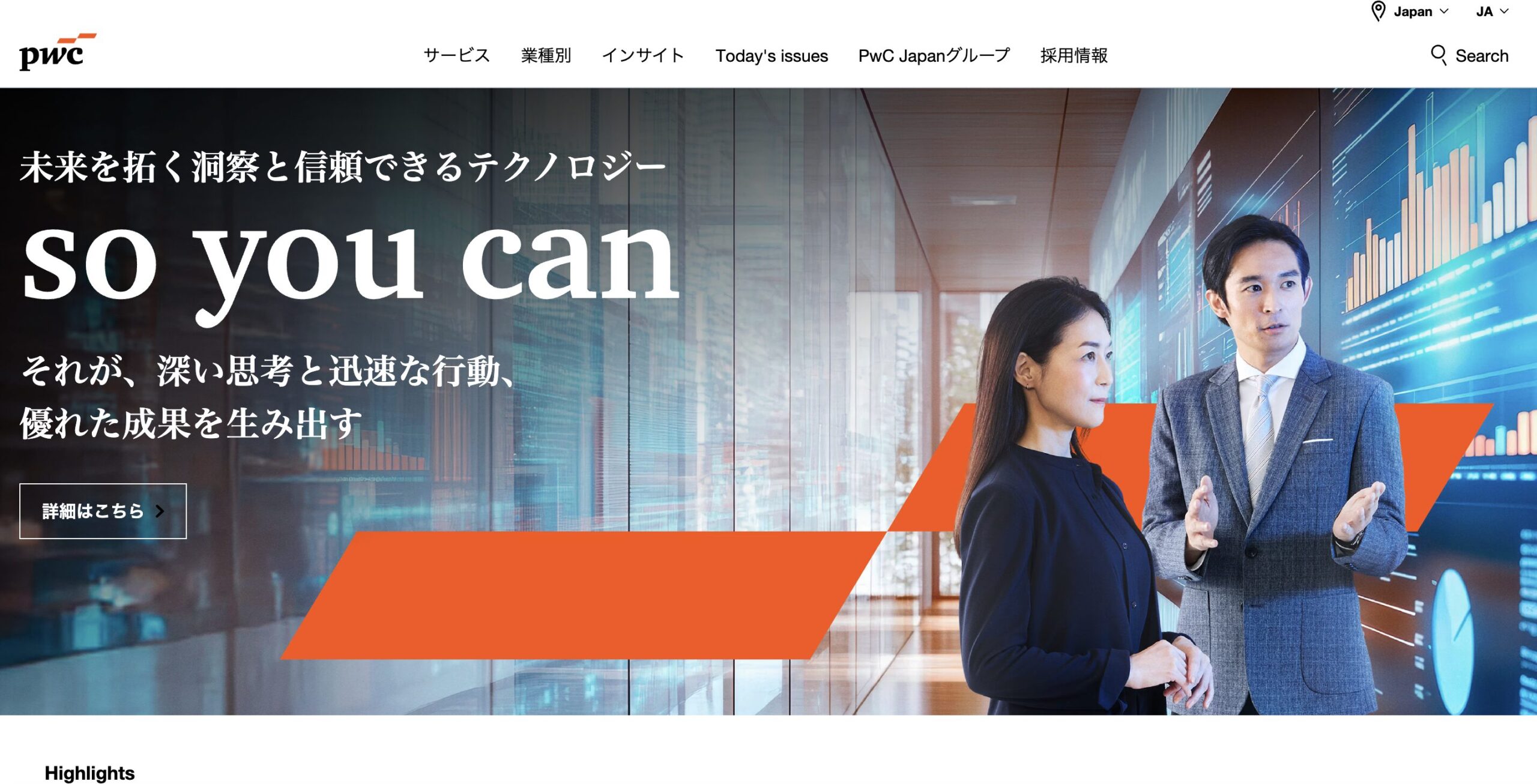
PwC Consulting LLC is a comprehensive consulting firm that supports business transformation and the strengthening of management infrastructure centered on ERP, backed by the expertise of the globally established PwC network. Covering major ERP platforms such as SAP, Oracle, and Microsoft, the firm provides end-to-end support from strategy and planning, business and IT requirements definition, system selection, implementation, testing, migration, go-live, and operational stabilization, aiming to achieve company-wide transformation rather than merely implementing systems.
In particular, it has strengths in integrated design encompassing not only core business functions such as finance and accounting, procurement, sales, inventory, production, and human resources, but also EPM / performance management, data analytics platforms, and internal control and governance. Even in highly complex programs such as the development and rollout of global templates, post-M&A core system integration, and migration to cloud ERP, the firm supports ERP utilization with a focus on future scalability, maintainability, and cost optimization by advancing business standardization (Fit to Standard) and change management in parallel.
Key Features
- Provides end-to-end support from planning to implementation and adoption, promoting both business transformation and effective ERP utilization at the same time
- Has strong capabilities in PMO and governance design for complex transformation programs such as global projects and post-M&A integration
- Proposes integrated architectures that include internal control, risk management, EPM, and data utilization
| 会社名 | PwC Consulting LLC |
|---|---|
| 本社 所在地 |
1-2-1 Otemachi, Chiyoda-ku, Tokyo, Japan |
Roland Berger
Company / Service Overview
Roland Berger, as a globally operating strategy consulting firm, supports clients from the formulation of corporate transformation and growth strategies through to execution. In the ERP domain, it frames initiatives not merely as system renewals, but as transformations (DX) that integrate management strategy, business reform, and digital platforms. The firm has a strong track record of supporting major global and domestic companies across a wide range of industries, including manufacturing, distribution, consumer goods, energy, and financial services.
It provides end-to-end support from planning and design—such as To-Be design, investment effectiveness analysis, and roadmap development—to requirements definition, product/vendor selection, PMO, migration and testing, and operational adoption. Through this comprehensive approach, it helps clients achieve advanced management control, standardization, and stronger governance. In addition, it designs overall architectures that include cloud ERP, data/analytics platforms, and integration with surrounding business systems, and delivers execution support for highly complex programs such as global template rollouts and post-merger integration (PMI) to ensure tangible results.
Key Features
- Integrates strategy, business transformation, and ERP, providing consistent support from planning through execution
- Promotes enterprise-wide optimization, including global standardization/governance and advanced management control (KPI, cost, and profitability management)
- Supports reliable execution management through PMO, migration, and adoption from a neutral standpoint independent of specific products or vendors
| 会社名 | Roland Berger |
|---|---|
| 本社 所在地 |
35F Toranomon Hills Station Tower, 2-6-1 Toranomon, Minato-ku, Tokyo, Japan |

ERP Consulting Firm Profiles for Multifunction Printer Manufacturers
Panorama Consulting Group — Independent ERP Selection Focused on Fit to Standard and Hardware-Service Management
Panorama Consulting Group delivers vendor-neutral ERP consulting, helping MFP manufacturers align ERP systems with hardware-service management needs through rigorous fit-to-standard methodology and process mapping to minimize risk.
Deloitte Consulting — Enterprise-Scale Cloud ERP and Data Integration for Global MFP Manufacturers
Deloitte supports large enterprises with end-to-end cloud-based ERP implementation, driving data integration across supply chain, production planning, and customer relationship management to accelerate digital transformation enterprise-wide.
Accenture — DX-Driven Business Process Reform and Integrated Maintenance Billing for Imaging Equipment Leaders
Accenture leads DX-focused business process reform for MFP manufacturers, delivering integrated maintenance billing, ERP solutions, and next-generation technologies that enhance operational efficiency across the entire organization.
Sikich LLP — Mid-Market ERP Implementation with Subscription Contract Management and Customer-Level Profitability Management
Sikich LLP provides mid-market MFP manufacturers with ERP software tailored for subscription contract management, enabling customer-level profitability management and successful implementation through predictable pricing and change management support.
Ultra Consultants — Manufacturing-Focused Fit to Standard Methodology with Data Utilization and Data Integration Expertise
Ultra Consultants applies a manufacturing-first ERP consulting approach, combining fit-to-standard methodology with deep knowledge of data integration and real-time data utilization to drive business performance improvements for MFP manufacturers.

How to Choose the Right ERP Consulting Partner for Your MFP Manufacturing Business
Evaluating ERP Vendor Fit: Aligning Cloud Platforms with Hardware-Service Management and Subscription Contract Management Needs
When selecting an ERP consulting partner, MFP manufacturers must verify that recommended ERP platforms natively support hardware-service management and subscription contract management without excessive customization. Cloud-based ERP platforms offer automatic updates and flexible module deployment, making them well-suited for manufacturers managing recurring service revenue alongside discrete production. Opt for ERP vendors that offer pre-built modules tailored to your specific sector, and confirm that the ERP vendor provides a clear upgrade path to support long-term scalability.
Assessing Data Utilization Capabilities and Customer-Level Profitability Management During ERP Selection
ERP systems must deliver real-time insights that support customer-level profitability management and data-driven decision-making across business functions. During ERP selection, assess whether the ERP platform provides advanced analytics, real-time data visibility, and integration capabilities connecting production, supply chain, and finance teams. ERP systems provide a single source of truth for business data, enabling management to stay ahead of margin erosion and operational inefficiencies.
Change Management, Fit to Standard Adoption, and DX Readiness as Key Consulting Partner Criteria
Successful ERP implementation depends as much on change management and user adoption as on technical execution. Evaluate the consulting firm’s team expertise in guiding organizations through fit-to-standard adoption, ensuring that business processes align with ERP systems rather than forcing costly customizations. Confirm that the partner demonstrates proven DX readiness, with experience aligning technology with strategic goals to minimize risk throughout implementation projects.

Core ERP Capabilities That Drive Success in Multifunction Printer Manufacturing
Integrated Maintenance Billing and Service Contract Automation as a Competitive Advantage in Cloud ERP
ERP systems that automate integrated maintenance billing and service contract management give MFP manufacturers a measurable competitive advantage. Cloud ERP platforms enable real-time data synchronization between field service, billing, and supply chain functions, reducing order processing errors and improving customer-level profitability management across hardware and service revenue streams.
Real-Time Data Integration Across Supply Chain, Production Planning, and Customer-Level Profitability Management
ERP solutions with real-time data integration capabilities allow MFP manufacturers to align supply chain planning with production planning and financial performance. ERP systems provide a single source of truth for business data, enabling the finance team to monitor customer-level profitability and operational efficiency simultaneously across the entire organization.
Business Process Reform Through DX: Modernizing Order Processing and Hardware-Service Management Workflows
Digital transformation through ERP implementation modernizes order processing and hardware-service management workflows, driving increased efficiencies across daily operations. ERP consulting helps manufacturers apply process mapping and fit-to-standard methodologies to eliminate legacy inefficiencies and align technology with strategic goals.

Cloud ERP vs. On-Premises ERP for Multifunction Printer Manufacturers
Cloud-Based ERP Platforms and Their Role in Subscription Contract Management and Remote Data Utilization
Cloud-based ERP platforms offer automatic updates and remote access via mobile devices, making them ideal for managing subscription contract management and distributed service operations. Modern cloud-based ERP solutions offer flexibility to easily deploy new modules, supporting the upgrade path toward full digital transformation for MFP enterprises.
On-Premises ERP Considerations: Hardware-Service Management Control and Integrated Maintenance Billing Stability
On-premises ERP systems require significant capital investment for hardware but provide greater control over integrated maintenance billing workflows and sensitive business data. These systems typically depreciate over five to ten years, making total cost evaluation essential during ERP selection for manufacturers with strict data governance requirements.
Hybrid Deployment Strategies and the DX Path Toward Full Data Integration for MFP Enterprises
Hybrid ERP deployment strategies combine the stability of on-premises systems with the scalability of cloud-based ERP platforms, enabling MFP manufacturers to minimize risk while advancing data integration and digital transformation goals. ERP consulting firms help manufacturers design hybrid architectures that balance system integration needs with operational efficiency and long-term strategic planning objectives.

FAQ
What is an ERP consulting firm and what services does it provide?
An ERP is a centralized software platform that integrates core business operations. Enterprise Resource Planning (ERP) is a type of software system designed to help organizations manage their daily business activities. ERP consulting services help align technology with business strategies. With deep industryexperience, ERP consultants often have over 25 years of industry experience to assist with enterpriseresourceplanning.
Which consulting firms specialize in ERP implementation for multifunction printer manufacturers?
As a trusted partner, our company serves this industry. Regarding our industriesserved and team’sexpertise, ERP implementations typically require around 150 consultants for large projects. We ensure these ERP systems manage day-to-day business activities.
What does an ERP consultant do during a manufacturing ERP project?
During projectmanagement, a systemsintegrator analyzes workprocesses. ERP consulting can reduce risks associated with software selection. We ensure ERP systems must align with strategic business objectives, and proper ERP alignment can enhance operational efficiency and scalability.
How do I choose the best ERP system for a multifunction printer manufacturing company?
When replacing an existingerpsystem with a stateoftheart newsystem, an ERP system must balance enterprise-grade capabilities with user-friendliness. Opt for ERP vendors that offer pre-built modules tailored to your specific sector. Choose an ERP that handles multi-currency, complex ledgers, and automated tax compliance. Finally, verify that the ERP vendor offers role-based access control and strong encryption.
What are the top ERP solutions used in the printing and imaging equipment manufacturing industry?
These enterpriseresourceplannningsystems leverage nextgenerationtechnologies and mrpii. ERP systems are designed to grow with a business by allowing the addition of new modules. Modern cloud-based ERP solutions offer flexibility to easily deploy new modules. In this industry, ERP integrates multiple business processes into a single system, while some ERP systems integrate multiple business processes into one platform.
How long does an ERP implementation take for a large manufacturing enterprise?
For a modernenterprise, managing the timeline is one of the biggest challenges. ERP implementation typically takes about 14 months for large enterprises, and indeed, ERP implementations can take 14 months for large enterprises. Meanwhile, organizations can spend millions on ERP systems annually, and organizations often spend millions on ERP systems annually. Historically, 27% of surveyed companies had a fully operational ERP system, and 27% of surveyed companies had a fully operational ERP system by 2011.
What is the difference between ERP and CRM systems in a manufacturing business context?
Unlike crmsystems, a nowerpsystem offers realtimeinsights. Specifically, ERP systems allow different departments to seamlessly share real-time data. Management gains access to up-to-the-minute data from across the organization through ERPs. These ERPs automate manual tasks and streamline workflows across departments, ensuring that ERP systems provide a single source of truth for data.
How can ERP consulting help minimize risk during a new ERP system rollout?
In publicorganizations, integratedmanagement helps minimize rollout risks. Since government resource planning (GRP) is equivalent to ERP for public sector, consultants must manage politics. Indeed, cultural factors significantly influence ERP implementation success in government, and ERP implementation in decentralized organizations is politically charged and complex.
What are the core ERP consulting services offered to manufacturing companies undergoing digital transformation?
We assist smallbusinesses with datamigration and supplychainmanagement. Note that ERP systems are essential for businesses of all sizes to maintain efficiency and competitiveness. ERP improves operational efficiency by automating workflows, and ERP systems enable better sharing of information and knowledge across departments. Also, ERP systems provide real-time visibility to leadership and employees. Advanced Analytics & Reporting should be provided by the ERP platform, while ERP systems optimize processes like inventory management and warehouse operations.
How do cloud-based ERP platforms compare to on-premises ERP systems for manufacturing businesses?
A cloudbased solution differs from an onpremises system. Cloud-based ERP platforms offer automatic updates and remote access. Specifically, Cloud ERP reduces operational expenses by eliminating hardware costs, while On-premises ERP requires significant capital investment for hardware. Also, Cloud ERP updates occur regularly, often monthly, whereas On-premises ERP systems typically depreciate over 5 to 10 years. For flexibility, Hybrid ERP combines both on-premises and cloud-based solutions, and ERP systems help comply with International Financial Reporting Standards.