![Top 5 Consulting Firms Specializing in Energy Industry ERP [Latest 2026]](https://growth-marketing-lab.com/marketing/wp-content/uploads/2025/08/テクノロジー-13-1024x724.jpg)
Discover the top 5 ERP consulting firms for the energy industry in 2026. Compare expertise, services, and selection criteria to find your ideal implementation partner.
Why Energy Companies Are Prioritizing ERP Investment in 2026
Modernizing Cost Structures Through Cloud-Based ERP and DX Initiatives
Cloud-based ERP platforms offer automatic updates and remote access, eliminating costly on-premises hardware. Modern cloud-based ERP solutions provide flexibility to deploy new modules rapidly, enabling energy companies to reduce fixed cost structures while accelerating DX initiatives across daily operations.
Regulatory Compliance Pressures Driving Business Process Reform Across Energy Operations
ERP systems help comply with International Financial Reporting Standards and automate tax compliance across multiple jurisdictions. Choosing ERP software with role-based access control and strong encryption ensures regulatory compliance while driving meaningful business process reform throughout energy operations.
Leveraging Data Utilization to Optimize Supply-Demand Management in Real Time
ERP systems provide real-time visibility across the entire organization, enabling supply chain planning teams to act on real time data instantly. Management gains access to up-to-the-minute business data, transforming supply-demand management and improving overall business performance across energy sector operations.

Overview of the Top 5 ERP Consulting Firms for the Energy Industry
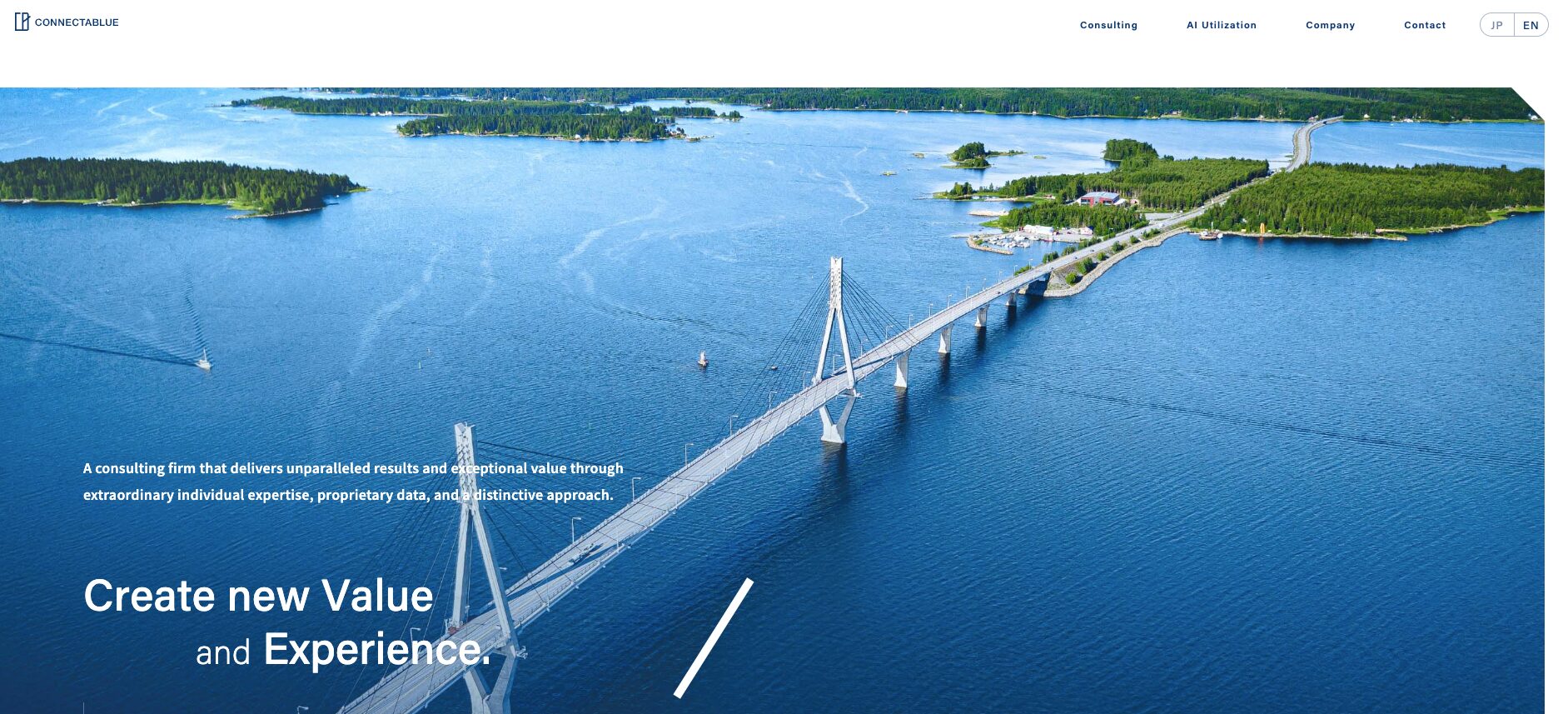
CONNECTABLUE, Inc.
Company / Service Overview
ConnectaBlue Co., Ltd. is a consulting firm that supports corporate Business Process Reform and the strengthening of management foundations, with ERP implementation and utilization support at the core of its services. The company has extensive experience serving both large enterprises and mid-sized companies across a wide range of industries, including manufacturing, trading, construction, IT, and logistics, with major ERP platforms such as SAP, Oracle, and Microsoft. From a vendor-neutral standpoint, it helps clients select and implement the most suitable Cloud or on-premise solutions based on their business needs. By incorporating the requirements of both management and frontline operations, ConnectaBlue develops practical DX roadmaps and drives execution-focused projects that accelerate measurable outcomes.
The company has strong capabilities in ERP planning based on both business transformation and system modernization perspectives. Assuming a Fit to Standard approach that maximizes the use of standard ERP functionality, it supports ToBe design with a view toward future scalability, maintainability, and cost structure optimization, while also assisting with product and vendor selection including Cloud ERP options. In the implementation phase, ConnectaBlue provides end-to-end support for leading ERP platforms such as SAP, Oracle, and Microsoft, covering requirements definition, system development, migration, go-live, and operational stabilization. Leveraging expertise in management KPI design, Data Utilization, and analytics, the company helps link BI and data platforms with operations to build foundations for business transformation. It also supports business requirements such as supply-demand management, equipment maintenance management, plant-level profitability management, and regulatory compliance.
In addition, ConnectaBlue has a global professional network of more than 500 specialists as well as alliance partnerships with domestic mid-sized system integrators. The firm manages more than 30 projects annually and provides comprehensive services from planning through implementation for clients ranging from mid-sized companies with annual revenue of JPY 50-100 billion to major enterprises with annual revenue of JPY 500 billion to JPY 1 trillion. Its client retention rate of over 90% also reflects strong customer satisfaction and trust.
Key Features
- Strong in business consulting, with proven capabilities in driving Business Process Reform and supporting Fit to Standard implementation through a hands-on, collaborative approach
- Advanced Data Utilization and data platform design capabilities based on deep knowledge of management KPI frameworks
- Vendor-neutral support that enables clients to make optimal decisions and build effective implementation plans without dependence on any specific product vendor
- A global network of more than 500 professionals and alliance partnerships with domestic mid-sized system integrators, enabling comprehensive services from strategy through implementation
- More than 30 projects delivered annually for clients ranging from JPY 100 billion to JPY 1 trillion in revenue across diverse industries, with a customer retention rate exceeding 90%
- Strong support for operational and management priorities including supply-demand management, equipment maintenance management, cost structure optimization, regulatory compliance, and plant-level profitability management
Track Record / Case Studies
- Delivered an ERP implementation project for an energy company, achieving centralized asset management and maintenance operations integration, improving equipment maintenance management and operational visibility (Revenue scale: JPY 1.2 trillion)
- Completed an ERP implementation for an automotive parts manufacturer, strengthening multi-site production control and quality traceability while enhancing supply-demand management and plant-level profitability management (Revenue scale: JPY 188 billion)
- Implemented ERP for an IT company, advancing personnel cost control and project profitability management while improving cost structure visibility and management decision-making speed (Revenue scale: JPY 580 billion)
| 会社名 | CONNECTABLUE, Inc. |
|---|---|
| 本社 所在地 |
LAPiS Aoyama II 5F, 2-4-8 Minami-Aoyama, Minato-ku, Tokyo |
IBM Japan, Ltd.
Company / Service Overview
Japan IBM Ltd. (IBM Japan) is a comprehensive IT services company that supports business transformation and core system modernization centered on ERP, leveraging technology and industry expertise cultivated on a global scale. In addition to major ERP platforms such as SAP, it provides end-to-end support ranging from planning and design to implementation, operation, and maintenance, covering surrounding systems, data platforms, and cloud infrastructure. The company has a strong track record primarily with large enterprises across a wide range of industries, including manufacturing, distribution, financial services, and the public sector.
Starting with the visualization of current operations and the design of the target To-Be model, IBM Japan adopts an implementation approach that emphasizes the maximum use of standard functions and strong governance. By minimizing excessive customization while linking cloud migration, business standardization, and data utilization (analytics, planning, and management control), it helps build a resilient management foundation that can adapt to change. Furthermore, even in large-scale programs involving global deployments, multiple sites, and multiple group companies, it integrates PMO/quality management, security, and operational design to ensure stable operations and continuous improvement.
Features
- Provides end-to-end support for business transformation centered on ERP, from planning and design through implementation and operations
- Combines cloud, data/AI, and security to extend capabilities into management control and business optimization
- Drives large-scale core system modernization, including global projects, with strong PMO and quality management capabilities
| 会社名 | IBM Japan, Ltd. |
|---|---|
| 本社 所在地 |
19-21 Nihonbashi Hakozakicho, Chuo-ku, Tokyo, Japan |
Kearney
Company / Service Overview
A.T. Kearney is a globally operating strategic consulting firm that provides end-to-end support ranging from management strategy to operational transformation and digital transformation. In the ERP domain, the firm goes beyond simple system implementation by combining business process redesign, derived from the ideal future state of management and operations, with core system renewal to strengthen corporate competitiveness and enhance management infrastructure. Backed by deep expertise across a wide range of industries, including manufacturing, distribution, consumer goods, chemicals, and energy, A.T. Kearney supports ERP utilization tailored to each client’s objectives, from large-scale enterprise-wide transformation programs to reforms in specific functional areas.
Its services cover vision and planning, the design of operations, data, and organizations, support for selecting ERP products and implementation approaches, requirements definition, implementation planning including global rollouts, PMO, and post-go-live operational stabilization and continuous improvement. By balancing return on investment (ROI) with the ability to execute transformation, the firm helps clients maximize the value of ERP initiatives. Incorporating concepts such as standardization (Fit to Standard) and global templates, while also providing hands-on support for user adoption and change management, A.T. Kearney helps ensure that ERP delivers tangible business outcomes rather than becoming a project that ends at implementation.
Key Features
- Drives enterprise-wide transformation centered on ERP, leveraging expertise in strategy and operations
- Supports global standardization, governance design, and the execution of large-scale implementations through PMO
- Focuses on post-go-live adoption and continuous improvement, helping create value through operations and data utilization
| 会社名 | Kearney |
|---|---|
| 本社 所在地 |
23F Midtown Tower, 9-7-1 Akasaka, Minato-ku, Tokyo, Japan |
Japan Research Institute, Limited
Company / Service Overview
Nihon Research Institute, Ltd. provides ERP support that combines expertise in think tank and consulting services with IT solutions to help companies transform core business operations and enhance management control. The company offers end-to-end support, from planning and business process design to requirements definition, implementation and migration, as well as post-launch operational stabilization, enabling transformation from both management and operational perspectives rather than merely replacing systems.
In addition to core business areas such as accounting, procurement, sales, inventory, production, and human resources, the company’s strength lies in designing overall optimization with a view toward group management control and data utilization platforms. It also provides hands-on support that includes integration with existing assets and surrounding systems, governance, and responses to security and internal control requirements. By emphasizing the use of standard functions and business process standardization, the company promotes ERP utilization with future scalability, maintainability, and total cost of ownership (TCO) in mind.
Features
- Provides end-to-end support from planning to implementation and operational stabilization, achieving business transformation and system reform simultaneously
- Strong in the overall design of ERP and surrounding platforms, taking into account management control, group governance, and internal controls
- Supports optimization through both Fit to Standard and data utilization, with a focus on scalability and TCO
| 会社名 | Japan Research Institute, Limited |
|---|---|
| 本社 所在地 |
Osaki Forest Building, 2-18-1 Higashi-Gotanda, Shinagawa-ku, Tokyo, Japan |
Bain & Company
Company / Service Overview
Bain & Company is a global consulting firm that provides end-to-end support, from strategy development through execution and adoption. In the ERP domain, Bain supports ERP implementation and enhancement not as mere system renewal, but as a transformation program that connects business strategy, operational reform, and data utilization. Assuming major ERP platforms such as SAP, the firm covers vision and roadmap development, business process and organizational design, requirements definition, decision-making support for implementation, PMO, migration and rollout, and post-go-live value creation, thereby promoting ERP utilization that is directly linked to business outcomes.
With a strong emphasis on field-based process visibility, global standardization, governance design, and change management, Bain helps prevent requirements and customization from becoming overly optimized for individual functions. This enables rapid value creation and a sustainable cycle of continuous improvement. Even in highly complex transformation situations such as post-merger integration (PMI), global rollout, and the advancement of management control, Bain increases the likelihood of project success through its ability to connect executive management and front-line operations.
Key Features
- Designs and drives ERP as a foundation for strategy execution and business transformation, rather than as a simple system implementation
- Strong capabilities in target operating model (TOM) and governance design that support executive decision-making
- Places strong emphasis on PMO and change management to support the execution and adoption of large-scale transformations such as global rollout and PMI
| 会社名 | Bain & Company |
|---|---|
| 本社 所在地 |
37F Midtown Tower, 9-7-1 Akasaka, Minato-ku, Tokyo, Japan |

How Each Firm Delivers ERP Value Across Energy Sector Operations
Deloitte — Aligning Fit to Standard ERP Frameworks With Plant-Level Profitability Management
Deloitte applies fit-to-standard ERP methodologies to help energy companies strengthen plant-level profitability management. Through structured process mapping and ERP selection, the firm minimizes costly customization while maximizing alignment between enterprise resource planning systems and core energy business processes, delivering measurable operational efficiency gains.
Accenture — Accelerating DX and Cloud Migration for Equipment Maintenance Management
Accenture leverages next generation technologies to accelerate cloud-based ERP migration for equipment maintenance management. By integrating ERP platforms with IoT and mobile devices, the firm enables real time data visibility across distributed energy assets, supporting digital transformation and driving competitive advantage through automated, data-driven maintenance workflows.
IBM Consulting — Driving Data Utilization and Business Process Reform in Supply-Demand Management
IBM Consulting drives business process reform by unifying ERP systems with operational data environments. Deep knowledge of supply chain planning and supply-demand management allows the firm to deliver integrated management solutions that provide real time insights, improve business performance, and support strategic planning across the entire organization.
Wipro — Reducing Cost Structures Through Predictable Cloud ERP Delivery Models
Wipro delivers cloud-based ERP solutions with predictable pricing, helping energy companies minimize risk and reduce cost structures. The firm’s industry experience across ERP implementation projects enables scalable ERP consulting services suited to both small businesses and large enterprises seeking increased efficiencies.
Capgemini — Strengthening Regulatory Compliance and Fit to Standard ERP for Energy Transition
Capgemini strengthens regulatory compliance by adopting fit-to-standard ERP approaches tailored to energy transition requirements. The firm configures ERP software with role-based access control and supports business process reform to help energy companies stay ahead of evolving compliance mandates and successfully implement new ERP system capabilities.

Key Criteria for Selecting an ERP Consulting Firm in the Energy Industry
Evaluating Industry Experience in Equipment Maintenance Management and Plant-Level Profitability
Prioritize ERP consulting firms with proven industry experience in equipment maintenance management and plant-level profitability. Verify the team’s expertise through case studies and consultant credentials to ensure successful implementation.
Assessing Cloud and DX Capabilities to Future-Proof Your ERP Investment
Assess each firm’s cloud ERP and DX capabilities to ensure your ERP platforms remain current. Cloud-based ERP systems offer automatic updates and integration capabilities that support long-term digital transformation and help energy companies stay ahead competitively.
Ensuring Fit to Standard Approaches That Support Regulatory Compliance and Cost Structure Goals
Choose ERP vendors and consulting partners who champion fit-to-standard ERP solutions. This approach supports regulatory compliance, reduces total cost, and establishes a sustainable upgrade path aligned with your strategic goals.

Common ERP Implementation Challenges Unique to the Energy Sector
Managing Data Migration Complexity Across Supply-Demand Management Systems
Data migration remains one of the biggest challenges when deploying a new ERP system in energy. Decades of siloed business data across supply-demand management platforms must be cleansed, mapped, and validated before go-live to minimize risk.
Overcoming Business Process Reform Resistance in Decentralized Energy Organizations
ERP implementation in decentralized organizations is politically charged and complex. Achieving user adoption requires structured change management, clear communication of strategic goals, and strong executive sponsorship across the entire organization.
Integrating Cloud ERP With Operational Technology for Equipment Maintenance Management
Cloud-based ERP platforms must connect seamlessly with operational technology systems to support equipment maintenance management. Robust integration capabilities and system integration planning are essential to ensure real time data flows without disruption to daily operations.

How to Maximize ERP ROI Through Strategic Planning and Continuous Improvement
Using Data Utilization and Advanced Analytics to Improve Plant-Level Profitability Management
ERP systems provide real time insights that directly improve business performance. By leveraging advanced analytics embedded in modern ERP platforms, energy companies can optimize production planning, reduce waste, and enhance plant-level profitability through smarter, data-driven decisions.
Building a DX Roadmap That Aligns ERP Systems With Long-Term Cost Structure Reduction
Aligning technology with long-term business process goals through a structured DX roadmap ensures ERP solutions deliver sustained cost reduction. Cloud-based ERP supports this by offering scalable, modular upgrade path options that grow alongside evolving enterprise resource planning needs.
Sustaining Regulatory Compliance and Business Process Reform After Go-Live
Successful implementation does not end at go-live. Ongoing ERP consulting services help energy companies sustain regulatory compliance, refine work processes, and continuously improve operational efficiency, ensuring ERP systems remain aligned with shifting industry and business requirements.

FAQ
What is an ERP consulting firm in the energy industry?
ERP consulting services help align technology with business strategies to meet strategic goals.
Who handles energy industry ERP?
Top firms offer deep knowledge and industry experience to stay ahead with successful implementation of enterprise resource planning systems.
What does an ERP consultant do?
ERP consulting can reduce risks associated with software selection. Consultants often have over 25 years of industry experience.
How do I choose the best industry ERP?
For erp selection, an ERP system must balance enterprise-grade capabilities with user-friendliness and erp solutions for the entire organization.
What is the industry difference between ERP and CRM?
ERP systems manage day-to-day business activities, while customer relationship management crm systems focus on managing client interactions.
What is the top energy industry ERP?
Energy firms use modern cloud based erp software and state of the art next generation technologies for their integrated management.
How much does ERP consulting cost?
Organizations can spend millions on ERP systems annually, where total cost depends on complex system integration and business performance.
What are the biggest industry challenges?
The biggest challenges include complex data migration and change management when aligning technology with work processes in many organizations.
How long does industry ERP implementation take?
ERP implementation typically takes about 14 months for large enterprises to deploy erp solutions and transform daily operations.
What to look for in an industry ERP vendor?
Opt for ERP vendors that offer pre-built modules tailored to your specific sector for your company. Ensure they support integration capabilities.
How does ERP support growth?
ERP systems are designed to grow with a business by allowing the addition of new modules to support every business process and company processes.
What are cloud ERP advantages?
Cloud-based ERP platforms offer automatic updates and remote access, helping any modern enterprise secure a competitive advantage.
How flexible is modern ERP software?
Modern cloud-based ERP solutions offer flexibility to easily deploy new modules and improve erp systems and processes.
How do ERPs handle compliance?
Choose an ERP that handles multi-currency, complex ledgers, and automated tax compliance to support your global company finance team.
How is ERP data secured?
Verify that the ERP vendor offers role-based access control and strong encryption to protect company business data across erp platforms.
What is the core definition of ERP?
An ERP is a centralized software platform that integrates core business operations and daily work processes.
What is enterprise resource planning?
Enterprise Resource Planning (ERP) is a type of software system designed to help organizations manage their daily business activities in a company.
How do departments share information?
ERP systems allow different departments in a company to seamlessly share real-time data.
How does management access data?
Management gains access to up-to-the-minute data from across the organization through ERPs.
How does ERP automate daily tasks?
ERPs automate manual tasks and streamline workflows across departments.
Who needs to use ERP systems?
ERP systems are essential for businesses of all sizes to maintain efficiency and competitiveness for each company in the digital age.
How does ERP improve efficiency?
ERP improves operational efficiency by automating workflows, offering increased efficiencies across the company.
How does ERP support collaboration?
ERP systems enable better sharing of information and knowledge across departments in a company to help small businesses stay ahead.
Who benefits from ERP visibility?
ERP systems provide real-time visibility to leadership and employees, providing real time insights for the company.
Is reporting critical in ERP?
Advanced Analytics & Reporting should be provided by the ERP platform to enhance erp platforms and strategic planning.
How does ERP optimize operations?
ERP systems optimize processes like inventory management and warehouse operations, and improve order processing.
What does an ERP integrate?
ERP integrates multiple business processes into a single system of processes to help a company streamline its business functions.
What is the adoption rate of ERP?
27% of surveyed companies had a fully operational ERP system, achieving system integration and competitive advantage.
What is the source of truth?
ERP systems provide a single source of truth for data, improving project management across erp platforms.
What resources are needed?
ERP implementations typically require around 150 consultants for large projects to minimize risk.
What is GRP in public sector?
Government resource planning (GRP) is equivalent to ERP for public sector, used by public organizations.
How do cultural factors affect GRP?
Cultural factors significantly influence ERP implementation success in government and public sector.
Is public ERP implementation complex?
ERP implementation in decentralized organizations is politically charged and complex, posing one of the biggest challenges.
What is the historical ERP adoption?
27% of surveyed companies had a fully operational ERP system by 2011 to manage their supply chain.
Does ERP help with accounting?
ERP systems help comply with International Financial Reporting Standards, boosting trust in the company.
What are cloud ERP financial benefits?
Cloud ERP reduces operational expenses by eliminating hardware costs, offering predictable pricing.
What are on-premises ERP costs?
On-premises ERP requires significant capital investment for hardware, unlike cloud based erp solutions.
How often does cloud ERP update?
Cloud ERP updates occur regularly, often monthly, to ensure the new erp system stays up to date.
What is on-premises depreciation?
On-premises ERP systems typically depreciate over 5 to 10 years, impacting the total cost of ownership.
What is a hybrid ERP model?
Hybrid ERP combines both on-premises and cloud-based solutions to build a strong erp software environment.
Why align ERP with strategy?
ERP systems must align with strategic business objectives.
What does proper ERP alignment do?
Proper ERP alignment can enhance operational efficiency and scalability across the entire organization.
What about other ERP integration?
ERP systems integrate multiple business processes into one platform to elevate business performance.
How do you choose erp software?
Selecting the right erp software requires thorough process mapping services.
Is erp software cloud based?
Most erp software today is cloud based, using professional services to minimize risk and improve company operations.
What is legacy erp software?
Upgrading legacy erp software provides better services and a clear upgrade path for small businesses.
Who installs erp software?
A dedicated systems integrator helps install erp software services for large enterprises.
Who benefits from erp solutions?
Many organizations adopt erp solutions to achieve better business services and stay ahead.
Are erp solutions expensive?
Modern erp solutions offer predictable pricing and reliable cloud services to stay ahead.
What is erp implementation?
An erp implementation involves professional services, process mapping and system integration.
How to minimize risk in implementation?
Successful erp implementation projects require change management services.
Who uses planning systems?
Global companies deploy enterprise resource planning systems to manage supply chain planning.
What does enterprise resource planning do?
Enterprise resource planning integrates business functions to boost growth.
Why invest in enterprise resource planning?
Organizations choose enterprise resource planning for digital transformation and supply chain management.
Is enterprise resource planning complex?
Implementing enterprise resource planning services requires detailed process mapping to minimize risk.
How does enterprise resource planning scale?
Enterprise resource planning services support expansion into new markets for any company.
Who needs enterprise resource planning?
Modern industries served by enterprise resource planning services require mobile devices.
When to upgrade your ERP?
A company should evaluate its existing erp system when seeking new integration services.
What is business process mapping?
We use process mapping services to analyze every business process and streamline processes.
Why map a business process?
Defining a business process helps align technology with strategic goals.
How do you select an erp vendor?
During erp selection, evaluating the erp vendor on consulting services is critical.
Is erp consulting worth it?
Engaging in erp consulting services helps minimize risk and stay ahead.
Who benefits from erp consulting?
Professional erp consulting services help company teams and large enterprises stay ahead.
How is the supply chain optimized?
ERP systems optimize the supply chain to improve order processing for small businesses.
Is production planning integrated?
ERP software streamlines production planning to improve business functions.
Why focus on aligning technology?
Aligning technology with strategic goals allows a company to stay ahead of competitors.
What is mrp ii?
Legacy mrp ii systems have evolved into modern enterprise resource planning systems.
How do users transition to a new system?
Users need proper training to adopt a new system and ensure high user adoption.
What are the benefits of a new system?
A new system improves work processes and boosts company efficiency.
What is the first step of erp selection?
The first step of erp selection involves identifying strategic goals for your company.
How do we evaluate erp consulting?
Look for erp consulting services with a team’s expertise and deep knowledge to minimize risk.
How is real time data used?
Decisions are made faster when employees access real time data across systems.
Who helps with the ERP selection process?
A professional systems integrator acts as a trusted partner to guide your company.